
Picture
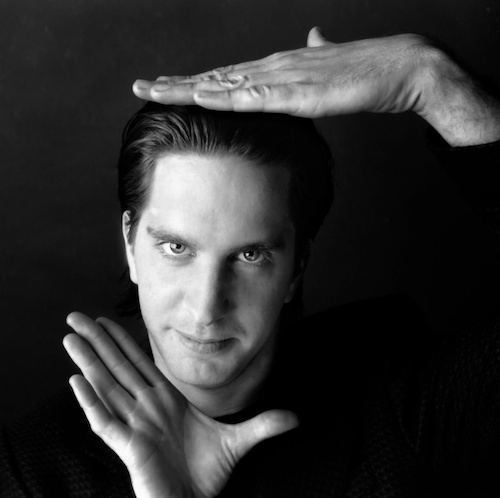
The "Skip Cohen is back!" campaign created millions of impressions, but that pales in comparison to the enthusiasm of all the people involved!
by Skip Cohen

If Burger King didn’t already own the rights to that tag line, it would be all over everything we’re working to build at Skip Cohen University.  Education is so personal when it comes to how you learn to expand your skill set.

Here’s a prime example. My wife loves to line-dance and I’ve agreed to join her for lessons. (At this point my closest friends are lying on the floor laughing at the vision of me on a dance floor, but I’ll swallow my pride and just put up with it!) Well, I’ve discovered that not only do I have two left feet, but in an environment of 100+ people in a class, I can’t learn the steps fast enough to keep up with everybody. I'm the goofball facing north when everybody else did their turn and is facing south!

I get frustrated and so does Sheila.. I’ve got no sense of rhythm and can’t stop counting out loud or looking at my feet. I make Chris Penn in Footloose look like Rudolph Nureyev! However, when we get home, if she takes the time to take me through the steps, without any distraction, I pick it up a whole lot quicker. The same thing happens when the class is smaller. Well, we went to class last night and they hit a song I actually knew. It was the equivalent of sinking that fifty foot putt...the one that keeps you in the game and we laughed all the way home.

Well, with SCU, we’re building a resource center that will allow you to take things at your own pace. I want you to be able to build on your skill set, one step at a time with the goal being to help you thrive, not just survive. Together we'll find those benchmarks along the way that keep you in the game with feedback and more support.

On March 8-9 we’re launching SCU with a mini-program in Las Vegas, just prior to the WPPI convention. We’re going to spend a day and a half talking about lighting, posing, storytelling and marketing. You’ll have an opportunity for some hands-on shooting, time to build your network and attend what will be a first for so many of you, an “Unconference”.

Meanwhile, through the entire process I want to help you with your marketing efforts. Scott Bourne will help you with social media. Rich Harrington will help you with your presentation style and storytelling. Michael Corsentino will help you expand the diversity of your engagement shoots and contemporary portraiture while Clay Blackmore will add to your knowledge of lighting and posing to help build a consistent bread and butter business line of quality images.

It’s all about your pace, our expertise and the goal of every program we do at SCU…helping you build your business.

Registration is just a click away. See you in Vegas!


Picture
Getting involved in charities in your community isn't just about passing the hat and raising cash. Often, it's just about you making the effort and establishing a reputation for giving back.
By Skip Cohen

One new component of Skip Cohen University will be our "Giving Back" program. We're initially setting things up so that 5% of everything, from program registrations to sponsorship will go into a fund for photo-centric non-profit groups. At the end of each year the Student Council, together with the Deans will decide on a charitable group to direct a donation to. Obviously, I'm hoping this amount can continue to grow higher, but you have to walk before you can run.

With help from the guest speakers a few years ago in Akron we were able to donate $10,000 to Akron Children's Hospital, all, after just four workshops. We've got the same goal here, but that's not the point of this post today.

The challenge is what are you doing in your own community?


This isn’t rocket science and it's hardly revolutionary, but in all honesty, for most photographers, especially those new to the industry, the concept hasn’t been in their thought process.  It’s so important to give back to your community.

People like buying products and services from companies they perceive as giving back. You’re looking for the community to be good to you – well, you’ve got to be good to your community. You can’t just sit on the sidelines and watch life go by. You need to be directly involved.

As we start out this new year think about other things you can do to give back:

  • Develop a promotion that ties in with a local or national charitable event. Your client’s check for your sitting fee might actually be made out to the event.
  • Build a promotional day, week or even month where all proceeds or a portion go to a local charity.
  • Volunteer to help non-profits in your community. This might not involve photography, just your donation of time.  Often just being involved will put you on the map as somebody who cares about the community.
  • Work to bring other photographers into the campaign. Nothing helps neutralize competition better than a group of people working together for a common cause.
  • Donate your services to events and groups of people who simply need photographs. A few of my favorites are: NILMDTS, HeartsApart.org and the F.I.L.M. Project.  Each of these organizations involve your skills in portraiture and they all need help. 
Keep an eye on the SCU blog posts and we'll soon run a Charity Fest. Charity Fest is just a series of posts sharing the ideas you have for building a reputation for giving back in your community. 

I love this quote from Muhammad Ali, which pretty much says it all:

“Service to others is the rent you pay for your room here on earth.”

Photo Credit: © Kvkirillov | Stock Free Images & Dreamstime Stock Photos
 
 
Picture
Photo by Scott Bourne
By Scott Bourne

Photographic clients buy photographs because:

1. It makes the buyer feel generous - supporting artists does that for us.
2. It makes the buyer feel smart - art is smart or so they say.
3. It makes the buyer feel like part of the creative process.
4. It is so useful there is no choice (such as wedding photo).
5. It benefits the buyer financially (because as a professional photographer you gave them an incentive to recommend you to friends.)
6. It makes the buyer feel happy.
7. The photographer is a very nice person and hard not to cheer for.
8. The work is better than anything else out there.
9. The work establishes an emotional connection.
10. The work tells a story that's important to the buyer.
11. The buyer wants to show off and having something pretty from a professional photographer to hang on the wall makes that possible.
12. The buyer is in awe of the photographer, the photo and the creative process and wants to share that with others.
 
 
Picture
Photo by Scott Bourne

By Scott Bourne

Pricing photography is the second hardest thing you will ever do as a professional photographer. (Finding the right clients is the first hardest.)

It’s very easy to make mistakes when pricing and once they’re made, it’s hard to recover from them. So start out right.

One disclaimer: Not every pricing method works for every photographer. Much depends on the current state of the market and the genre (i.e., wedding, commercial, fine art, food, etc.) I’ll try to stick to some universal ideas in these posts.

Start at the Beginning

You can’t effectively price your work until you understand what it is you’re selling.

You are not selling square inches of paper for the cost of printing them. For some reason, the first element that seems to enter some photographers’ minds when making a pricing decision is the size of the print. This “brick wall” has cost many photographers money. The most important thing to keep in mind is the value of your work, not the size of the print. You build this value by evaluating ALL the factors that go into making a salable image.

So what are you selling? How about your creativity and unique ability to capture something that others do not see? Anyone can buy a camera, but can they capture the image exactly the way you do? How about the time you have invested in training for the moment when you captured the image? That time needs to be taken into consideration. Your mechanic, doctor, accountant, and lawyer all get paid for the time they spend doing the work. Shouldn’t you be paid too? You also have to consider the level of your present technical ability. The casual amateur should not be able to get the most out of the same equipment as an experienced professional. And speaking of equipment, you must also take into consideration the value of your gear. So, as you are deciding how to price your work, make sure you take into account and charge for your logistical skills, experience, time and your ability to translate your client’s desires into a visual statement.

Know what you’re selling before you try to sell it. This will help you avoid many mistakes later.

Pricing Economics

In order to price something well, you must know the economics. Here are some key things to keep in mind:

A) Overhead
B) Profit margin
C) The market you are serving

Calculating your overhead requires that you consider all the costs that are associated with being a professional photographer.  This includes:

A) Equipment depreciation
B) Insurance
C) Rent
D) Licenses
E) Legal fees
F) Accounting fees
G) Payroll fees
H) Salaries
U) Taxes
J) Utilities
K) Production
L) Repairs
M) Printing
N) Postage
O) Office supplies
P) Subscriptions
Q) Professional dues
R) Advertising/marketing
S) Transportation/shipping
T) Travel

Calculating your profit may be a bit easier. You consider your cost of doing business by allowing for a percentage of your overhead to be applied to the cost of each job. From there, mark up your price to include a standard profit margin. This can be based on any number you want but a good starting point is to double the cost of your product (100 percent profit margin).

Now you also need to adjust this figure based on the market type you are serving. Is the image being used in a small or large market? Will thousands of people see it or just a few? What is the perceived value to the client? How does the client plan to use your image? Who is your competition and what choices does your client have besides you for this type of image? Are there 50 photographers in the mix or only two or three? Consider these factors to calculate your fee.

When you sell or license an image, it is likely that you will have to negotiate the price with a savvy photo buyer. Knowing how to negotiate can save you time, money and help you close profitable deals. Remember that negotiating is just problem solving. Both parties have something they need to accomplish and the negotiation makes it happen.

You must not take ANY of the issues that arise during a negotiation personally. The buyer is supposed to try to get the best deal that he or she can. That’s their job. Your job is the same.

The essential steps in the negotiating process are: establish rapport, gather information, do research, ask questions, and let the buyer do most of the talking. In any negotiation, the person who listens most is likely to gain more. In any negotiation, it’s always very important that you do more listening than talking. Otherwise, you will miss important clues, both physical and verbal, that will help you resolve the deal.

Before quoting a price, you must try to educate the client and build the value of the image you are selling. Make sure that the client understands the effort, time and expense you invested to make this image. If the image is truly one-of-a-kind or was made at personal risk, those factors translate directly into the value of what you have for sale.

Try to encourage the client to place an opening bid. If the buyer is the first one to name a price, I believe you will be rewarded with a higher fee. A good way to open the negotiation process is to ask a question like, “What’s the most you would be willing to pay to use my image or purchase my print?” If you are forced to begin the negotiation process by offering a figure, an alternative is to begin with a number that is twice your standard price plus 10 percent. Once this figure is given, you can work down from there.

But remember that if you give a number first, you run the risk of quoting a price that is much lower than the buyer was willing to pay, and you’ll never know what figure they were willing to pay. So, let your clients do the talking. Then, you should listen, take notes, and preferably wait for them to tell you what they can afford.

If the client has pricing objections, be sure to return to the rapport building and value enhancement stages outlined above. Usually, a price objection really means that there is another piece of information you have not uncovered.  It is likely that there is something else you have not offered that the client really wants or needs. This is why it’s crucial to listen more than you talk and ask plenty of questions to uncover hidden needs.

Once you have taken all the necessary steps, be sure to ask for the order. A surprising number of photographic sales don’t happen simply because the seller has forgotten to ask for the sale.

(NOTE: Negotiating with magazines is not possible unless you are a famous photographer with images that are in great demand. When you approach magazines, understand that you will only get paid their standard rates.)
 

    Authors

    Skip Cohen is President of SCU, founder of Marketing Essentials International and past president of Rangefinder Publishing and WPPI. He's been an active participant in the photographic industry since joining Hasselblad USA in 1987 as president.  He has co-authored six books on photography and actively supports dozens of projects each year involving photographic education. 

    Scott Bourne is Dean of Marketing at SCU and is a professional photographer and educator with more than three decades of photographic experience. He's authored seven photography books and taught more than 200 photo workshops. His work has been published in more than 250 books, newspapers, magazines and web sites. 

    Archives

    May 2013
    April 2013
    March 2013
    February 2013
    January 2013

    Categories

    All
    Giving Back
    Humor And Sarcasm
    In The News
    Marketing
    Motivational
    Sales
    Social Media
    Technique
    Weekend Shorts